
Carbon Monoxide Alarm Going Off When the Heat Turns On? What Richmond Homes and Businesses Should Do
Every year, the first few cold weeks in Fort Bend County bring the same calls. The heat runs for the first time since spring, and within an hour or a day a carbon monoxide alarm starts going off. Sometimes it's a worn out detector. Sometimes it's a furnace that sat in a hot attic all summer and came back on with a blocked vent or a damaged part. You can't see, smell or taste carbon monoxide, so the alarm is the only warning you get.
Here's how to tell what your alarm is saying, what to do right now and what usually causes it in Richmond area homes and businesses.
Alarm sounding right now? Get everyone outside into fresh air and call 911 first. Once the fire department clears the building, call (346) 485-8142 and we'll find the source before the heat goes back on.
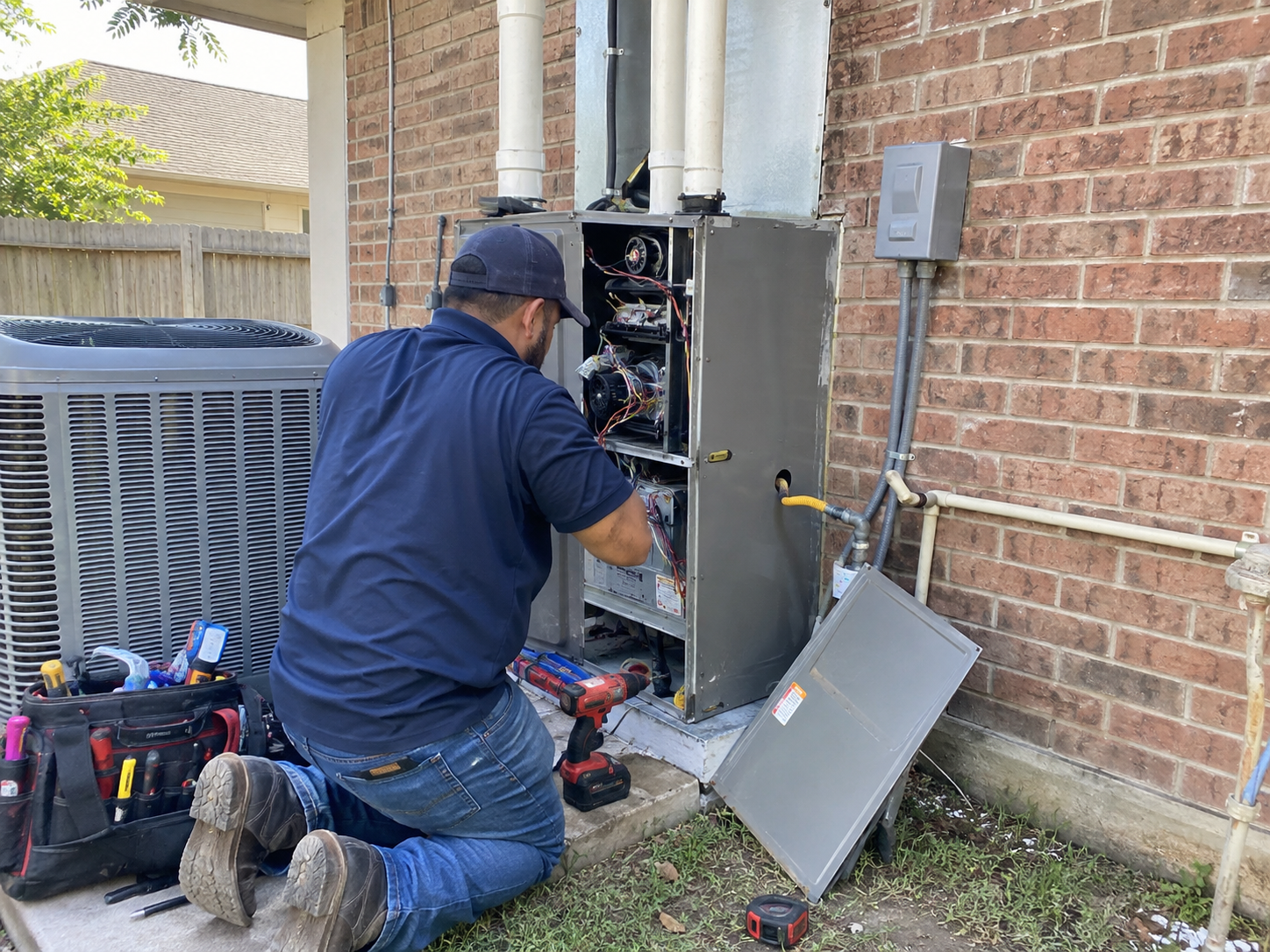
What Your Alarm Is Telling You
Not every beep means carbon monoxide. The pattern tells you which situation you're in. Patterns vary by brand, so check the label on the back of the alarm, but most work like this:
| What you hear | What it usually means | What to do |
|---|---|---|
| 4 loud beeps, a pause, then 4 more, repeating | Carbon monoxide detected | Get outside now and call 911 |
| A number on the display, with or without beeping | The alarm is reading carbon monoxide | Treat it as real. Get outside and call 911. |
| 1 chirp about once a minute | Low battery | Replace the battery and test the alarm |
| Chirping every 30 seconds that a new battery doesn't stop, or several chirps in a row each minute | The alarm has reached the end of its life | Replace the alarm today. It may no longer detect carbon monoxide. |
| An irregular chirp or error code | The alarm has a fault | Replace it |
Most carbon monoxide alarms last 7 to 10 years. If you moved into your home years ago and never replaced the ones that came with it, check the date printed on the back.
If the Alarm Is Going Off: Do This, in This Order
- Get everyone outside into fresh air, including pets. Don't stop to open every window first.
- Call 911 from outside. Fire departments carry meters that can confirm whether carbon monoxide is present and how high it is.
- Pay attention to how people feel. Headache, dizziness, nausea, weakness, confusion or flu like symptoms, especially when several people in the house feel sick at the same time, are warning signs. Tell the 911 dispatcher.
- Don't go back in until the fire department says the building is clear.
- Don't turn the heat back on until the furnace, water heater and any other gas appliances have been inspected. If the source isn't fixed, the problem comes back the next time the heat runs.
Smell rotten eggs instead? That's natural gas, not carbon monoxide. Leave on foot, avoid light switches and phones inside and call 911 and CenterPoint Energy's gas leak line at 713-659-2111 once you're outside. See our guide on what to do if you smell gas near your water heater.
Why Alarms Go Off When the Heat First Comes On
Furnaces in Richmond, Sugar Land, Rosenberg and Katy sit unused for seven or eight months a year, usually in an attic that gets extremely hot all summer. Here's what we find most often when a carbon monoxide alarm sounds in the first weeks of heating season.
1. A vent pipe that came loose in the attic
A gas furnace and water heater send exhaust outside through metal vent pipes. In attics, those pipes get bumped during insulation work, cable installs, roof repairs and holiday decoration trips. One loose joint can spill exhaust into the attic, and from there into the house. This is one of the most common causes we see, and one of the easiest to fix.
2. A blocked flue or vent cap
Birds, wasps and debris move into vent caps over the summer. A partly blocked vent pushes exhaust back down instead of out. On high efficiency furnaces, the PVC intake and exhaust pipes can be blocked the same way.
3. A cracked heat exchanger
The heat exchanger keeps combustion gases separate from the air blowing into your rooms. A crack or rust hole lets those gases mix with your air. It's more common in older furnaces, especially ones that have been exposed to years of attic humidity. A cracked heat exchanger means the furnace shouldn't run until it's replaced or the exchanger is repaired.
4. Poor burner combustion
Dust, rust and spider webs on burners after a long idle summer can cause incomplete burning, which produces more carbon monoxide. A lazy, yellow or flickering flame instead of a steady blue one is a sign.
5. A water heater that's backdrafting
A gas water heater in the garage or a closet can spill exhaust when its vent is blocked or when the house is under negative pressure, for example when a strong kitchen exhaust fan or a dryer is running. Look for scorch marks or rust around the top of the water heater.
6. Car warmups in an attached garage
On cold mornings, people start the car in the garage to warm it up. Even with the garage door open, exhaust can drift into the house through the door to the kitchen or laundry room. If the alarm goes off around the same time every morning, this is a likely cause.
7. Gas ovens, generators and space heaters
Using a gas oven to heat the kitchen, running a portable generator in or near the garage or using an unvented gas space heater can all create dangerous carbon monoxide levels. During the February 2021 freeze and power outages, Houston area hospitals treated large numbers of carbon monoxide cases tied to generators and cars running indoors. Generators always go outside, well away from doors and windows.
For Businesses: Offices, Shops and Warehouses
Commercial buildings around Richmond and Rosenberg have their own carbon monoxide risks that show up when the heat comes on:
- Rooftop units with gas heat. Cracked heat exchangers and blocked flues on packaged rooftop units can pull exhaust back into the building through the fresh air intake.
- Gas unit heaters in warehouses and shops. These ceiling hung heaters sit unused for months and collect dust and nests in their vents.
- Propane forklifts and equipment running inside closed buildings during cold weather, when doors stay shut.
- Mechanical rooms with gas water heaters or boilers next to occupied spaces.
If you manage a building, put carbon monoxide alarms near every gas fired appliance and in occupied areas served by gas heat. Have the heating equipment inspected before the first cold front, not after the first complaint. Our commercial HVAC repair team services rooftop units, unit heaters and split systems across Fort Bend County.
What a Technician Checks After a Carbon Monoxide Alarm
A proper inspection after a carbon monoxide event goes well beyond "the furnace turned on." When we respond, we check:
- Carbon monoxide levels in the living space and in the supply air at the vents
- A combustion analysis of the flue gas, to measure how cleanly the burners are firing
- The heat exchanger, including a camera inspection where we can reach it
- Every vent connection from the furnace and water heater to the roof
- The vent cap and draft, to confirm exhaust is leaving the house
- Burner condition and flame pattern
- The water heater, gas range and any other gas appliances
- The location and age of your carbon monoxide alarms
You get photos of anything we find. If someone tells you the heat exchanger is cracked, ask to see it. Our article on what happens during a furnace diagnosis walks through the full process.
Many fixes are simple: reconnecting and sealing a vent pipe, clearing a blocked cap, cleaning burners. A cracked heat exchanger on an older furnace is usually a replacement decision. Our guide to furnace replacement cost in Richmond explains what goes into that price. For everything else, see our heating repair service.
Burning Smell vs Carbon Monoxide: Know the Difference
Usually harmlessA dusty, slightly burnt smell the first time you run the heat is normal. It's dust burning off the heat exchanger, and it should fade within an hour or so. Our post on why a heater smells like burning plastic explains which smells are harmless and which aren't.
No warning smellCarbon monoxide has no smell at all. A furnace can smell perfectly normal while producing dangerous levels of it. That's why you can't rely on your nose, and why a working alarm matters.
Where to Put Carbon Monoxide Alarms
- On every level of the home, including any finished attic space or bonus room
- Outside each sleeping area, close enough to wake people up
- Near the door from an attached garage into the house
- Near, but not right next to, the furnace closet and the water heater
- Not in the garage itself, in a bathroom or directly above a stove
Test them monthly with the test button. Replace batteries once a year, unless they're sealed 10 year units, and replace the alarm itself by the date printed on the back.
How to Prevent This Before the Next Cold Front
- Schedule a heating tune up before winter. A proper tune up includes a combustion check and a vent inspection. See our HVAC maintenance plans.
- After any attic work, such as insulation, roofing or wiring, ask the contractor to confirm the furnace and water heater vents weren't moved, or have them checked.
- Never warm up the car in the garage, even with the door open.
- Keep generators outside, at least 20 feet from doors and windows.
- Never use a gas oven or grill to heat the house.
Running the heat for the first time this season? Our guide to your heater's first cold front covers what's normal and what isn't.
Frequently Asked Questions
Why does my carbon monoxide detector go off when the heat turns on?
The most common causes are a disconnected or blocked vent pipe, a cracked heat exchanger or poor combustion in a furnace that sat unused all summer. Get outside, call 911 and have the heating system inspected before you use it again.
What do 4 beeps on a carbon monoxide detector mean?
On most models, four quick beeps and a pause, repeating, means carbon monoxide has been detected. Move everyone to fresh air right away and call 911.
Why is my carbon monoxide detector chirping every 30 seconds?
If a new battery doesn't stop it, the alarm has usually reached the end of its life and needs to be replaced. Many models stop detecting carbon monoxide in end of life mode, so replace it the same day.
Can a furnace leak carbon monoxide without smelling?
Yes. Carbon monoxide has no smell. A furnace can smell completely normal and still be producing dangerous levels, which is why a working alarm is so important.
Can I turn the heat back on after the fire department leaves?
Not until the furnace and other gas appliances have been inspected and the source has been found and fixed. Otherwise carbon monoxide can build up again the next time the heat runs.
Is a cracked heat exchanger dangerous?
Yes. It can let combustion gases, including carbon monoxide, into the air you breathe. The furnace should stay off until the heat exchanger or the furnace is replaced. Always ask for photo or camera proof of the crack.
Does an electric heat pump produce carbon monoxide?
No. Electric heat pumps and electric heat strips don't burn fuel, so they don't produce carbon monoxide. Homes with gas water heaters, gas ranges, fireplaces or an attached garage still need carbon monoxide alarms.
Do businesses need carbon monoxide alarms?
Any building with gas heat, gas water heaters or fuel powered equipment indoors should have them near those appliances and in occupied areas. Local code requirements vary by building type, so check with your city or fire marshal.
Don't Turn the Heat Back On Until It's Checked
If your carbon monoxide alarm went off this season, the alarm did its job. Now the system needs to be inspected so it doesn't happen again. Temper Mechanical's NATE certified technicians test for carbon monoxide, check every vent and inspect the heat exchanger, then show you exactly what we found. We serve homes and businesses in Richmond, Sugar Land, Rosenberg, Pecan Grove, Katy and Cinco Ranch, with emergency heating service 24/7.
Call (346) 485-8142 to schedule a heating safety inspection.
Call (346) 485-8142Office hours: Monday to Sunday, 8:00 AM to 7:00 PM. Emergency heating service available 24/7.
Temper Mechanical Air & Heat, LLC · 6115 FM 762 Suite 1200, Richmond, TX 77469 · (346) 485-8142 · info@tempermechanical.com
HVAC License TACLA 92943C, regulated by the Texas Department of Licensing and Regulation, P.O. Box 12157, Austin, TX 78711 · Plumbing License MPL 45322, regulated by the Texas State Board of Plumbing Examiners