
AC Smells Like Mildew, Burning Plastic, or Rotten Eggs? Here Is What Your AC Is Trying to Tell You
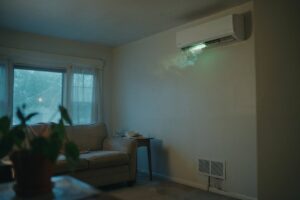
Your nose is often the first thing that tells you something is wrong with your AC or heating system — before any warning light, before any error code, and sometimes before any performance drop at all.
Some smells coming from your vents are harmless and easy to fix yourself in an afternoon. Others are serious enough that you should shut your system off right now and not turn it back on until a licensed technician has looked at it.
The problem is knowing which is which.
That is exactly what this guide covers. We work with homeowners across Richmond TX, Sugar Land, Pecan Grove, Rosenberg, and Fort Bend County who call us after noticing a strange smell from their HVAC system. In our experience, the smell itself almost always points directly to the cause — if you know what to look for.
If you are smelling something right now that worries you, call Temper Mechanical at (346) 485-8142. We offer same-day AC repair in Richmond TX and can diagnose smell-related issues quickly and safely.
Otherwise, read on. This guide will tell you exactly what each smell means, how urgent it is, and what it typically costs to fix.
Smell 1: Mildew or Musty Odor — The Most Common AC Smell in Fort Bend County
If your AC smells like a damp basement or a wet towel that sat too long in the washing machine, you are dealing with mold or mildew somewhere in your system. And in Richmond TX’s climate, this is by far the most common AC complaint we hear.
Here is why it happens so often here specifically. Fort Bend County sits in one of the most humid regions of Texas. When your AC runs, it pulls warm humid air over the evaporator coil, which causes moisture to condense on the coil surface. That moisture is supposed to drain away through the condensate drain line. But when the drain line gets clogged — which happens frequently because algae and mold grow readily in warm, wet, dark drain lines — that moisture sits and becomes a breeding ground for mold and mildew.
The smell then gets picked up by the air moving through your system and pushed out into every room of your home through your supply vents.
Other causes include mold growing inside your air ducts themselves, a dirty evaporator coil that has accumulated enough organic debris to support mold growth, or standing water in your drain pan.
This smell is not immediately dangerous in most cases but it is not something to ignore. Mold spores circulating through your home’s air affect indoor air quality and can aggravate allergies, asthma, and respiratory conditions. In a home with children or elderly family members, this is especially worth addressing promptly.
What to do right now: Replace your air filter, which may be harboring mold growth itself. Then check the area around your indoor air handler for any signs of water leakage or pooling around the drain pan.
What a professional will do: Flush the condensate drain line, clean the evaporator coil, inspect the ductwork for mold growth, and check the drain pan for standing water or damage. Our air duct cleaning service in Richmond TX addresses mold and debris buildup inside ductwork specifically.
Cost to expect: $100 to $300 for a drain line flush and coil cleaning. Duct cleaning runs $300 to $600 depending on the size of your home and the extent of buildup.
Urgency level: Address within 1 to 2 weeks. Not an emergency but do not keep putting it off.
Smell 2: Burning Plastic or Burning Rubber — Turn Your System Off Now
This one is not subtle and it is not something you wait on.
A burning plastic or burning rubber smell coming from your vents almost always means something electrical is overheating inside your system. This could be a failing capacitor, an overheating blower motor, damaged wiring with melting insulation, a contactor burning out, or a circuit board with a component that has failed and is generating heat it cannot dissipate.
In rare cases it can also be something non-electrical, a piece of plastic that fell into a vent, a toy near a supply register, or a pest that found its way into ductwork. But do not assume that is the case before investigating.
Why this is urgent: Electrical components that overheat can cause fires. HVAC systems run on significant electrical current and the combination of heat, electrical current, and flammable materials inside your system is not something to test.
What to do right now: Turn your system off at the thermostat. Then go to your electrical panel and switch the breaker for your HVAC system to off as well. Do not turn it back on until a technician has inspected it.
Call us at (346) 485-8142. This is one of the situations where same-day service is not just convenient, it is important.
What a professional will do: Perform a full electrical inspection of the system including the capacitors, contactor, blower motor, wiring, and control board. Identify the component that is overheating, replace it, and verify that no other components were damaged by the heat event.
Cost to expect: $150 to $600 depending on which component has failed. Capacitor replacement is on the lower end. Blower motor replacement runs $300 to $600. Control board replacement can reach $400 to $900.
Urgency level: Immediate. Do not run the system with this smell present.
Smell 3: Rotten Eggs or Sulfur — Leave the House
If you smell rotten eggs or sulfur coming from anywhere near your HVAC system, furnace, or water heater, treat this as a gas emergency.
Natural gas is odorless in its natural state. The sulfur smell you are detecting is actually a chemical called mercaptan that gas companies add to natural gas specifically so that leaks can be detected by smell. If you can smell it, there is gas present where it should not be.
What to do right now: Do not touch any light switches. Do not use your phone inside the house. Do not turn anything electrical on or off. Leave the house immediately, leave the front door open as you go, and call your gas company from the street or from a neighbor’s house. Call 911 if the smell is strong.
Do not go back inside until the gas company has inspected and cleared the property.
Once the gas company has confirmed the source has been addressed, call a licensed HVAC technician to inspect your furnace and any gas-connected appliances before turning them back on.
This smell has nothing to do with your AC specifically. It is a gas supply issue that may be near your HVAC equipment but originates in the gas line or connection.
One important note specific to this area: homes in Santa Fe TX and parts of Fort Bend County on well water sometimes experience a sulfur smell from the water supply rather than from gas. If the smell is coming from your water taps rather than your HVAC vents, that is a water quality issue. Our water filtration and softener services address sulfur and hydrogen sulfide in residential water supplies.
Urgency level: Treat as an emergency. Leave immediately.
Smell 4: Sweet or Ether-Like Smell — Refrigerant Leak
A sweet chemical smell, sometimes described as smelling like ether, chloroform, or a faint sweetness that does not belong in your home, often indicates a refrigerant leak.
Refrigerant in its gaseous state has a faintly sweet chemical odor. Most people do not immediately identify it as a chemical smell, which is why refrigerant leaks sometimes go undetected for longer than they should.
While refrigerant is not flammable, it is not harmless either. In an enclosed space, refrigerant displaces oxygen and in large concentrations can cause dizziness, headaches, and in extreme cases more serious health effects. It is also harmful to the environment, which is why the EPA regulates its use and disposal strictly.
Signs that accompany a refrigerant leak include the sweet smell, ice forming on your refrigerant lines or indoor coil, your home not reaching the set temperature despite the system running constantly, and a hissing sound near the indoor or outdoor unit.
What to do right now: Turn off your AC system, open windows for ventilation, and call a licensed HVAC technician. Do not try to find or fix a refrigerant leak yourself.
What a professional will do: Use electronic leak detection equipment to pinpoint the exact location of the leak, repair it properly, and recharge the system with the correct amount and type of refrigerant. Simply adding refrigerant without finding the leak is not a proper repair.
Cost to expect: $200 to $1,500 depending on leak location, severity, and the type of refrigerant your system uses.
Urgency level: High. Address within 24 to 48 hours.
Smell 5: Musty or Stale Smell at the Start of the Season
This one is seasonal and in most cases completely normal.
When you turn your heating system on for the first time in the fall after months of sitting unused, it is common to notice a burning or musty smell for the first 20 to 30 minutes of operation. What you are smelling is dust that has settled on the heat exchanger, burners, and heating elements burning off as the system heats up for the first time.
In most cases this smell disappears completely within half an hour and does not return. If it persists beyond that or comes back every time the system runs, there is more than just dust involved.
Similarly, when you run the AC for the first time after the winter, a brief musty smell as the system starts up can simply be dust in the ductwork being disturbed. If it goes away quickly, it is usually not a concern.
What changes this from harmless to concerning: If the burning smell does not go away after 30 minutes. If it gets stronger rather than weaker. If you see any smoke or notice any discoloration around vents or registers. If the smell is present every time the system runs, not just at startup.
In any of those cases, turn the system off and call us.
Smell 6: Chemical or Formaldehyde-Like Smell — Possible Heat Exchanger Crack
This is one of the most dangerous smells on this list and one of the most important to take seriously.
A chemical smell, sometimes described as smelling like formaldehyde or a sharp chemical tang that irritates your eyes or throat, can indicate a cracked heat exchanger in a gas furnace.
The heat exchanger is the component that separates the combustion gases produced by burning gas from the air that circulates through your home. When it cracks, those combustion gases, which include carbon monoxide, can mix with your indoor air and be distributed through your entire home by your blower.
You cannot see a heat exchanger crack without disassembling the furnace. And the smell can be subtle enough that it is easy to dismiss. This is one of the reasons we always say that if you have a gas furnace, working carbon monoxide detectors on every floor of your home are not optional equipment. They are a basic safety requirement.
What to do right now: Turn off your furnace. Do not run it. Check your carbon monoxide detectors. If any are alarming, leave the house immediately and call 911. If they are not alarming but you are still concerned, call a licensed HVAC technician before running the furnace again.
What a professional will do: Perform a heat exchanger inspection using a combustion analyzer and inspection camera to look for cracks, holes, or corrosion. If a crack is found, repair or replacement of the heat exchanger is required. This is not a patch job.
Cost to expect: Heat exchanger repair or replacement runs $500 to $2,000. On older furnaces, this cost often makes replacement of the entire unit more financially sensible, and a good technician will give you an honest comparison.
Urgency level: Immediate. Do not run a furnace with a suspected heat exchanger crack.
Smell 7: Dirty Sock or Locker Room Smell
This one is unpleasant but specific enough that it has an actual name in the HVAC industry: Dirty Sock Syndrome.
It is caused by bacteria and mold growing on your evaporator coil. In Richmond TX’s climate, the evaporator coil goes through repeated cycles of getting cold and wet during operation and then warming up and drying slightly when the system shuts off. That cycle of wet and dry at room temperature is ideal for bacterial growth.
The smell is most noticeable right when the system starts up or shuts off because that is when the coil is at the temperature range where bacteria is most active.
This is distinct from the general mildew smell described in Reason 1, although they can sometimes occur together. Dirty Sock Syndrome specifically involves bacteria on the coil surface rather than mold in the drain line or ductwork.
What a professional will do: Clean the evaporator coil with an antimicrobial coil cleaner, treat it to inhibit future bacterial growth, and check the rest of the system for contributing factors. In persistent cases, a UV light system installed inside the air handler can eliminate the bacteria continuously and prevent recurrence.
This is one of the most effective upgrades for homes in Fort Bend County where the climate makes this problem recurring.
When to Shut Your System Off Completely
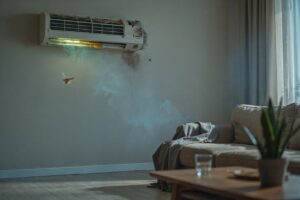
To make this simple, here is a direct summary of when you should turn your system off immediately and not turn it back on until a technician has visited:
You smell burning plastic, burning rubber, or anything electrical. Turn it off now and call.
You smell rotten eggs or sulfur from vents near your furnace or gas appliances. Leave the house and call your gas company from outside.
You smell a sweet chemical smell accompanied by ice on your lines or reduced cooling. Turn it off and call within 24 hours.
You smell a sharp chemical smell that irritates your eyes or throat when the furnace runs. Turn it off and call before running it again.
You see smoke coming from any vent, register, or the unit itself. Turn it off, exit the home, and call 911 if the smoke is significant.
For anything else, mildew, mustiness, dirty sock smell, seasonal startup smell, you can run the system while you arrange a service visit but do not leave it more than a week or two.
Professional Diagnosis Costs in Richmond TX
We get asked this frequently and we believe in being straight about what things cost.
Standard diagnostic visit: $75 to $100. This covers a technician coming out, running through the system, identifying the source of the smell, and explaining what needs to be done. We apply this fee toward the repair if you proceed.
Coil cleaning: $150 to $350 depending on the coil condition and access.
Drain line flush: $100 to $200.
Duct inspection and cleaning: $300 to $600 for a full home.
Electrical component inspection and repair: $150 to $600 depending on what needs replacing.
Refrigerant leak detection and repair: $200 to $1,500.
Heat exchanger inspection: $100 to $200 for the inspection alone. Replacement varies significantly by system.
We give you the exact price before starting any work. No surprises, no pressure.
Check our current HVAC repair specials before you call. We regularly run discounts for Fort Bend County homeowners.
One Final Thing Worth Saying
Your HVAC system runs for thousands of hours every year in one of the most demanding climates in the country. A strange smell is its way of telling you something has changed. Taking it seriously costs you a diagnostic fee. Ignoring it can cost you a full system replacement, damage to your home, or in the worst cases, something far more serious.
If something smells wrong, trust your instincts and make the call.
We serve homeowners throughout Fort Bend County including Sugar Land, Pecan Grove, Rosenberg, and Cinco Ranch.
Call Temper Mechanical Today
If your AC or heating system is producing any of the smells described in this guide and you are not sure what to do next, call us now.
Temper Mechanical: (346) 485-8142
Same-day service available throughout Richmond TX and Fort Bend County. We answer 7 days a week. Real people, no call centers, honest pricing before we start any work.
Not ready to call? Fill out our quick form at tempermechanical.com/contact and we will call you back within 15 minutes.
Temper Mechanical Air and Heat LLC | 6115 FM 762 Rd Suite 1200, Richmond TX 77469 | (346) 485-8142