
A toilet leaking at base most often means a failed wax ring or a loose or damaged flange, though a leaky supply line or tank can also cause pooling. If water is collecting, shut off the supply valve behind the toilet and dry the floor. Then run a paper-towel test or a dye test to find where the water is actually coming from.
TL;DR:
- Use dry paper towels to trace leaks during a flush; tank dye reaching the bowl within 10 minutes without flushing signals an internal leak.
- Snug closet bolts gradually and alternate sides, because overtightening can crack porcelain; if replacing the wax ring, inspect the flange before resetting the toilet.
- A typical plumber repair costs $150 to $300, while contained floor repairs run $600 to $1,500, and full subfloor replacement costs $2,000 to $5,000.
- Call a licensed plumber if the floor feels soft, the toilet rocks more than 1/4 inch after tightening, or water appears on the ceiling below.
Table of Contents
- What causes a toilet to leak at the base?
- How do you find where the water is coming from?
- How do you fix a toilet leaking at the base yourself?
- When should you call a plumber?
- What does a base leak cost to fix?
- Why does acting fast matter?
- How we triage a toilet leak
- Need a licensed plumber for the leak?
- FAQ
- Sources
What causes a toilet to leak at the base?
Most base leaks come down to a handful of mechanical problems. Knowing them lets you form a hypothesis before you start testing.
- Failed wax ring: The wax seal between the toilet and the flange dries out, flattens, or shifts, so water escapes with each flush.
- Loose bolts or a damaged flange: If the closet bolts are loose or corroded, or the flange is cracked or sitting at the wrong height, the toilet rocks and breaks the seal.
- Leaking supply tube or tank bolts: Water that runs down the outside of the bowl can look like a base leak when it really starts higher up.
- Cracked bowl or tank condensation: A hairline crack in the porcelain leaks quietly, and a sweating tank drips onto the floor on humid days.
- A clogged drain: A partial clog pushes water back up and past the seal. Angi lists a clogged drain line among six common reasons for base leaks, alongside an old wax ring and a cracked bowl.
A toilet that was just installed can leak for a different reason. American Standard’s knowledge base points to an unlevel flange, an improperly installed wax ring, or a hairline fracture in the ceramic as the usual suspects.
How do you find where the water is coming from?
Run these tests in order. They need nothing but towels and food coloring.
- Dry everything. Wipe the bowl, tank, supply line, and floor completely, then shut off the supply valve if water is pooling.
- Try the paper-towel test. Lay dry paper towels around the base and along the supply line, restore the water, and flush. Wetness that shows up at the base points to the seal. Wetness along the supply line points to the fitting.
- Run a dye test. Add a few drops of food coloring to the tank. The EPA says that if color reaches the bowl within 10 minutes without a flush, the tank is leaking internally.
- Note the timing. A leak that only shows up after flushing usually means the wax seal or flange. A constant drip points to the supply line, valve, or tank.
- Check for rocking. Grip the bowl and try to shift it. Any movement suggests loose bolts or a flange problem.
How do you fix a toilet leaking at the base yourself?
Start with the cheapest, lowest-risk fix and work up. Before you begin, wear gloves and have a helper ready, because a toilet is heavy and awkward to lift.
Tighten the bolts first. Snug the closet bolts a little at a time, alternating sides. This Old House advises against overtightening, since porcelain cracks under too much force. Tighten the supply nut the same way.
Replace the wax ring if the leak continues.
- Shut off the supply valve, flush, and hold the handle to drain the tank. Sponge out the leftover water.
- Disconnect the supply line and remove the nuts on the closet bolts.
- Rock the toilet gently and lift it straight up, then set it on towels or cardboard.
- Scrape off the old wax and inspect the flange for cracks or a bad fit.
- Press a new wax ring into place, lower the toilet onto the bolts, and press down evenly.
- Reinstall the nuts, reconnect the supply, and test with several flushes.
The Home Depot recommends cleaning and disinfecting the area afterward.
Swap a leaking supply tube or tank bolts. A flexible braided supply tube with a fresh washer is a simple upgrade. New tank bolt washers stop drips where the tank meets the bowl.
Pro Tip: Check the flange before you set the toilet back down. A flange that is cracked, corroded, or sitting below the floor will defeat even a brand-new wax ring.
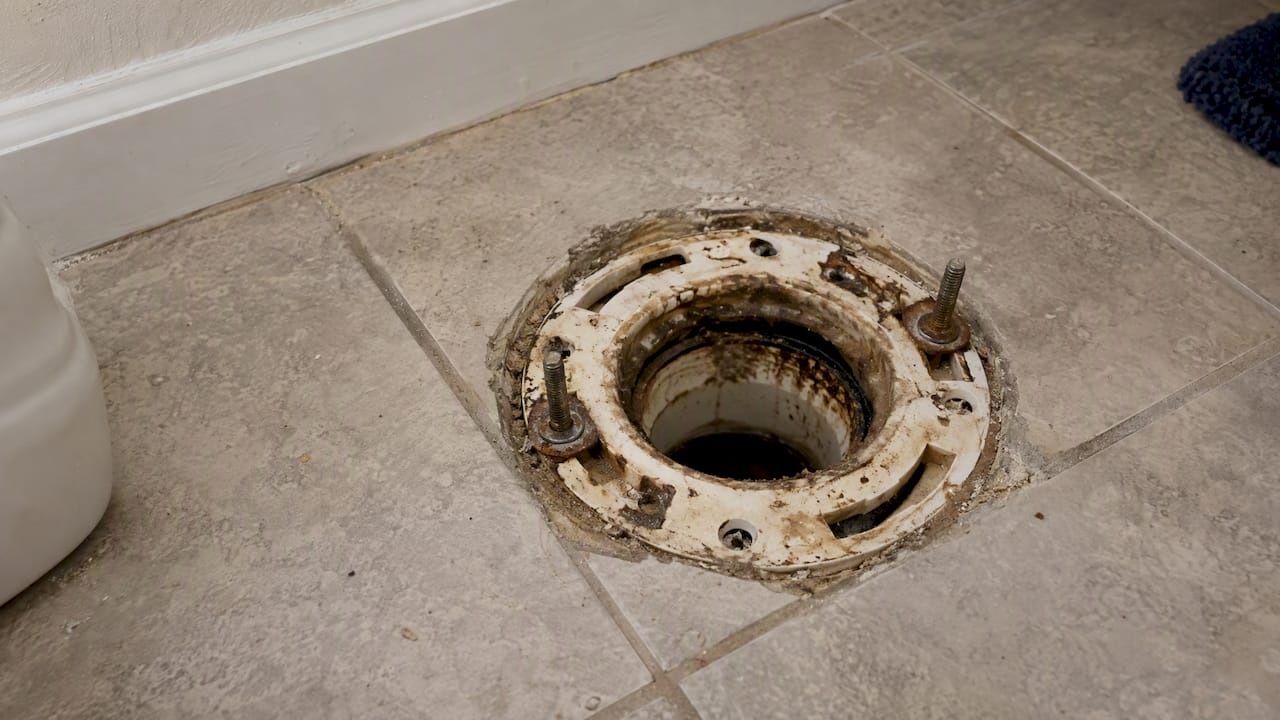
A damaged flange often needs a plumber, because the repair can involve cutting into the floor or drain connection.
When should you call a plumber?
Some leaks are beyond a weekend repair. Call a licensed plumber if you see any of these:
- The floor around the toilet feels soft or spongy.
- The toilet rocks more than 1/4 inch even after tightening the bolts.
- Water shows up on the ceiling below the bathroom.
- The flange is visibly broken, or the bowl has a crack.
- The base still pools after you replaced the wax ring.
- You notice mold or a persistent musty smell.
If water is flooding the room, shut off the main water supply and call for help right away. Our guide on what to do about a burst pipe or active water leak walks through the first steps.
What does a base leak cost to fix?
Costs depend on how long the water has been escaping and what it touched.
- Parts: The cost of a wax ring varies by product and retailer.
- Plumber visit: Angi puts plumber rates at $75–$150 per hour, with a typical base-leak repair around $150–$300.
- Contained floor repair: WaterDamageFinder reports small toilet-leak floor repairs usually run $600–$1,500.
- Full subfloor replacement: The same guide puts a full-bathroom subfloor replacement at $2,000–$5,000.
- Timing: Repairs that reach joists or require a rebuild cost more, and insurance coverage depends on your policy and the circumstances of the damage, so photograph everything.
Rot begins within 24–48 hours of sustained saturation, according to NationwideBuilders. A slow leak you ignore for a week can turn a $150 fix into a floor replacement.
Why does acting fast matter?
Leaks waste water and money, and the damage spreads quietly. The EPA reports that household leaks waste nearly 1 trillion gallons of water every year, and a stuck toilet fill valve can waste up to 4,300 gallons per day.
Fixing easily corrected leaks can save homeowners about 10% on their water bills. — US EPA WaterSense
Early repairs can limit damage to the subfloor. We offer 24/7 emergency plumbing and leak detection from licensed technicians for homeowners who would rather not handle it themselves.
How we triage a toilet leak
When a call comes in, we look at safety and structural risk first, then locate the source, then contain the damage. A tightened bolt or a fresh wax ring is a reasonable weekend job. A soft floor, a rocking toilet, or a leak that reaches the ceiling below is where a hands-on diagnostic saves you money, because the real cost sits in what the water has already touched. Our rule is simple: if you can’t confirm the source in a few minutes, stop and stop the water.
— Wally
Need a licensed plumber for the leak?
When a base leak keeps coming back, or the floor feels wrong underfoot, we send a licensed technician to find the cause and fix it with transparent pricing. We handle emergency plumbing and leak detection, and you can request an on-site diagnostic. Reach us through our emergency plumbing and leak detection page and tell us what you are seeing.

FAQ
What would make a toilet leak around the base?
The most common cause is a worn-out wax ring that no longer seals the toilet to the flange. Loose closet bolts, a cracked flange, a leaking supply line, or a hairline crack in the bowl can also cause water to collect around the base.
Do plumbers replace the subfloor under the toilet?
Yes, when water has soaked and softened the wood, plumbers or repair crews cut out the damaged section and replace it. Small contained repairs typically run $600–$1,500, according to WaterDamageFinder.
How much does it cost to fix a toilet leak at the base?
A simple wax ring replacement usually lands around $150–$300 with a plumber, per Angi. The price climbs if the flange is broken or the subfloor is damaged.
How much water does a leaky toilet waste?
It depends on the leak, but a stuck fill valve can waste up to 4,300 gallons per day, according to the EPA. A seal leak at the base wastes less water but can still cause serious floor damage.
Sources
- Leak Facts | WaterSense | US EPA
- How to Fix a Leaking Toilet – This Old House
- How to Fix a Leaking Toilet Base – The Home Depot