
Look, I’m going to level with you. If you live in Pecan Grove, you already know that our Texas humidity is no joke. But here’s what most folks don’t realize until it’s too late: that thick, muggy air we deal with nine months out of the year? It’s not just making you sweat — it’s quietly turning your home into a breeding ground for stuff you definitely don’t want to breathe.
I’ve talked to dozens of homeowners around here who thought their constant sniffles, that musty smell in the morning, or their kid’s worsening allergies were just “part of living in Texas.” Turns out, it was their indoor air quality — or lack thereof — causing the problem all along.
So let’s talk about what’s really going on in your home, why Pecan Grove’s climate makes this issue especially critical, and what you can actually do about it. No sales pitch, no technical jargon that requires a PhD to understand. Just straight talk about keeping your family healthy.
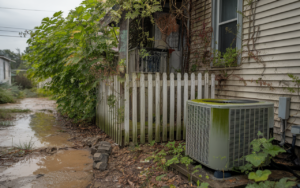
Why Pecan Grove’s Climate Is a Perfect Storm for Poor Indoor Air Quality
Here’s the thing about living near the Gulf Coast: we get hammered with humidity. We’re talking 70-90% humidity levels for a huge chunk of the year. And while that’s great for our lawns and terrible for our hair, it creates some serious problems inside our homes.
Humidity + Your Home = A Science Experiment Gone Wrong
When warm, moist air meets your air-conditioned home, it’s like a biological party invitation. Mold spores that were just floating around harmlessly suddenly have the perfect conditions to set up shop. Dust mites — those microscopic critters that love to munch on dead skin cells — thrive in humid environments. And bacteria? They’re basically living their best life.
I had a neighbor who kept blaming her “old house smell” on the previous owners. Turns out, hidden mold in her ductwork was the real culprit. Once she addressed her indoor air quality, that smell vanished within a week.
The AC Paradox
Here’s something that trips people up: your air conditioner actually contributes to indoor air quality problems if it’s not properly maintained. Think about it — your AC pulls in air, cools it, and pushes it back out. But if your filters are clogged, your coils are dirty, or your system is oversized (yeah, bigger isn’t always better), you’re basically recycling contaminated air throughout your home.
Plus, in Pecan Grove, we run our AC pretty much year-round. That means whatever’s in your system is getting circulated constantly. It’s like if you never changed the oil in your car but kept driving it every single day. Eventually, things get gunky.
What’s Actually Floating Around in Your Home Right Now
Let me paint you a picture of what’s probably in your indoor air. Don’t worry — I’m not trying to freak you out. But understanding what we’re dealing with helps you make better decisions.
The Usual Suspects:
Mold and Mildew — These love our humid climate. They don’t just cause that musty smell; they release spores that can trigger allergies, asthma attacks, and respiratory issues. Some molds even produce mycotoxins that can cause serious health problems over time.
Dust Mites — These tiny bugs live in your bedding, furniture, and carpets. Their waste (yeah, gross, I know) is a major allergen. In dry climates, they struggle. In Pecan Grove? They’re throwing a rager.
Pet Dander — If you’ve got dogs or cats (and around here, who doesn’t?), their dander is floating around constantly. It’s not just fur — it’s dead skin cells, saliva, and urine proteins that stick to everything.
Pollen — Even when you keep your windows closed, pollen finds its way inside on your clothes, shoes, and pets. Our area deals with oak, pine, ragweed, and grass pollen almost year-round.
VOCs (Volatile Organic Compounds) — These come from everyday stuff: cleaning products, air fresheners, new furniture, paint, carpet, even that nice-smelling candle you love. In our tightly sealed, air-conditioned homes, these chemicals just accumulate.
Dust and Particles — Regular household dust, but also stuff from outside: vehicle exhaust, construction dust, and even particles from nearby agricultural areas.
One family I know thought their toddler was just “naturally sniffly.” After improving their indoor air quality, those symptoms cleared up completely. The pediatrician even confirmed their child’s lung function improved. That’s not coincidence — that’s real impact.
Why Your Current AC Filter Probably Isn’t Cutting It
Alright, real talk: when was the last time you changed your AC filter? If you had to think about it for more than three seconds, it’s probably been too long.
But here’s the bigger issue — most homes around here are using those cheap, blue fiberglass filters that cost like three bucks. I get it. They’re affordable, they fit the slot, and they technically count as “having a filter.” But here’s what they’re actually doing: almost nothing.
The Filter Rating Scale You Need to Know
Filters are rated on something called the MERV scale (Minimum Efficiency Reporting Value). Don’t let the name intimidate you — it’s just a number from 1 to 20 that tells you how well a filter catches particles.
- MERV 1-4: These are your basic fiberglass filters. They catch big stuff like dust bunnies and hair, but they miss most allergens and mold spores. It’s like using a tennis racket as a coffee filter.
- MERV 5-8: These are better. They’ll catch mold spores, dust mite debris, and some pollen. This is the minimum you should consider for Pecan Grove homes.
- MERV 9-12: Now we’re talking. These catch most allergens, mold, and even some bacteria. Great for families with allergies or pets.
- MERV 13-16: These are hospital-grade filters. They catch bacteria, smoke, and viruses. Honestly, these might be overkill for most homes, and they can strain some HVAC systems if not designed for them.
The Local Challenge
Here’s something specific to our area: because of our humidity and the fact that we run AC constantly, filters get dirty faster here than in drier climates. That filter that’s supposed to last three months? In Pecan Grove, during summer, it might need changing every 4-6 weeks.
I learned this the hard way when I first moved here from Colorado. I kept my “every three months” schedule and wondered why my allergies were terrible and my energy bill kept climbing. Turns out, a clogged filter makes your system work harder and filters less effectively. Lose-lose situation.
What “A/C Filters Near Me” Really Means (And What You Should Actually Be Searching For)
I know you’ve probably googled “a/c filters near me” at some point, probably at 9 PM when you suddenly remembered you needed one. Here’s what you need to know about that search.
Big Box Stores vs. Specialty Suppliers
Sure, you can run to Home Depot or Lowe’s and grab a filter off the shelf. For basic needs, that’s fine. But here’s what those stores won’t tell you:
- The filters on their shelves are often the lowest common denominator — what sells the most, not necessarily what works best.
- Staff there usually aren’t HVAC experts. They can help you find the right size, but they can’t tell you what’s optimal for Pecan Grove’s specific climate challenges.
- Selection is limited. If you need something specific — like a filter that handles high humidity or one that’s eco-friendly — you’re probably out of luck.
Local HVAC Supply Shops — The Hidden Gem
We’ve got a few HVAC supply shops in the area that are actually open to homeowners (not just contractors). These places are goldmines. The folks working there actually know their stuff. They can recommend filters based on:
- Your specific HVAC system
- Your home’s humidity levels
- Whether you have pets, allergies, or respiratory issues
- How often you actually run your system
Plus, they often carry better quality filters and can order specialty items if needed.
The Subscription Option
Here’s a modern solution that’s actually pretty smart: filter subscription services. Companies like FilterBuy, Filter King, or even Amazon’s Subscribe & Save will automatically send you filters on a schedule you set.
Why this works: You never forget. The filter shows up, you change it. Simple. And for those of us with busy lives (which is everyone), removing that mental burden is worth it.
What to Actually Look For When Buying Filters
Forget the marketing hype. Here’s what actually matters:
- The right size — Measure your current filter or check your HVAC manual. A filter that’s even slightly wrong won’t seal properly and lets unfiltered air through.
- MERV rating appropriate for your system — Higher isn’t always better. Check your HVAC manual or ask a pro what your system can handle.
- Pleated vs. fiberglass — Pleated filters have more surface area and catch more particles. Worth the extra few bucks.
- Antimicrobial treatment — In our humid climate, this can help prevent mold and bacteria growth on the filter itself.
- Actual replacement schedule — Be honest with yourself about how often you’ll actually change it, then pick a filter rated for that timeframe.
The Whole-Home HVAC Filtration Game-Changer
Okay, so we’ve talked about regular filters. But what if I told you there’s a way to really level up your indoor air quality game? That’s where whole-home HVAC filtration systems come in.
Think of your regular filter as a coffee filter, and a whole-home system as a professional-grade water purification system. Both do the job, but one does it way better.
What Whole-Home Filtration Actually Means
A whole-home system isn’t just a better filter slapped into your existing slot. It’s an integrated system that works with your HVAC to clean every bit of air that circulates through your house. There are a few different types:
1. Media Air Cleaners
These are like super-charged filters. They’re thicker (sometimes 4-6 inches vs. your standard 1-inch filter) with more pleats and surface area. They can catch particles down to 0.3 microns — that’s smaller than most bacteria.
The cool thing? They don’t restrict airflow as much as you’d think, and they only need changing once or twice a year. For busy families, that’s a huge plus.
2. Electronic Air Cleaners
These use an electrical charge to attract and trap particles. Think of it like a magnet for dust, pollen, and other airborne junk. They’re super effective and the filters are washable, so you’re not constantly buying replacements.
The catch? They need regular cleaning (usually monthly) to work properly. If you’re not good about maintenance, these aren’t your best bet.
3. UV Light Systems
These install right in your ductwork and use ultraviolet light to kill mold, bacteria, and viruses as air passes through. They’re especially useful in our humid climate because they specifically target biological growth.
Real talk: UV lights won’t catch dust or pollen, so they’re usually paired with another filtration system. But for mold and bacteria control? They’re legit.
4. HEPA Filtration Systems
HEPA (High-Efficiency Particulate Air) filters are the gold standard. They catch 99.97% of particles 0.3 microns or larger. We’re talking bacteria, mold spores, most viruses — pretty much everything.
The challenge? True HEPA systems require professional installation because they need your HVAC system to be modified to handle the increased airflow resistance. But if you or a family member has serious allergies or respiratory issues, they’re worth considering.
Is a Whole-Home System Worth It for Pecan Grove Homes?
Honest answer: it depends on your situation. Here’s when it makes the most sense:
- Someone in your household has allergies, asthma, or respiratory issues — This is the big one. If someone’s quality of life is affected by air quality, the investment pays for itself quickly.
- You have pets — Multiple dogs or cats? Yeah, a whole-home system will make a noticeable difference.
- Your home has had mold issues — Once you’ve dealt with mold, prevention becomes crucial. These systems help a lot.
- You’re sensitive to odors or chemicals — Some systems include activated carbon filters that specifically target VOCs and odors.
- You’re planning to age in place — As we get older, our respiratory systems become more vulnerable. Planning ahead makes sense.
The Investment Reality
Let’s talk money because that’s probably what you’re wondering. A whole-home system typically runs anywhere from $800 to $2,500+ for the equipment and installation, depending on what you choose.
That sounds like a lot, I know. But break it down:
- Better health outcomes (fewer doctor visits, less medication)
- HVAC systems last longer because they’re cleaner
- Energy efficiency improvements (clean systems run more efficiently)
- Home value increase (yes, this is actually a selling point now)
One family I know spent about $1,500 on a media air cleaner system. Their son’s asthma improved so much he went from using his inhaler daily to maybe once a week. They calculated they saved about $800 that year in medication and doctor copays alone.
The Humidity Factor: Why Dehumidification Matters Just as Much
Here’s something most people overlook when thinking about indoor air quality in Pecan Grove: humidity control is just as important as filtration. Maybe more so.
The 30-50% Sweet Spot
Indoor humidity should ideally be between 30-50%. Above 50%, you’re creating a mold and dust mite paradise. Below 30%, you get dry skin, irritated sinuses, and increased static electricity (annoying but not dangerous).
In Pecan Grove, without proper humidity control, your indoor humidity can easily hit 60-70%. That’s problem territory.
Your AC Already Dehumidifies… Sort Of
Your air conditioner does remove some moisture as it cools. But here’s the catch: it only dehumidifies when it’s running. And if your AC is oversized (a common problem around here), it cools your home quickly, shuts off, and doesn’t run long enough to properly dehumidify.
Plus, during milder months when the AC isn’t running as much, humidity control goes out the window.
Whole-Home Dehumidifiers
These integrate with your HVAC system and automatically maintain ideal humidity levels year-round. They’re more efficient than portable units and you don’t have to empty water buckets constantly.
For Pecan Grove homes, especially if you’ve had mold issues or that persistent musty smell, a whole-home dehumidifier paired with good filtration is the one-two punch that really solves the problem.
Signs Your Humidity Is Too High
- Condensation on windows
- Musty odors
- Visible mold or mildew
- Warped wood floors or doors that stick
- That “clammy” feeling even when the AC is running
- Dust mite allergy symptoms that won’t go away
If you’re nodding along to several of these, humidity is likely your primary issue.
Practical Steps You Can Take Right Now (No Matter Your Budget)
Alright, so we’ve covered a lot. But you might be thinking, “This all sounds great, but I can’t drop $2,000 on a whole-home system right now.” I get it. Here are practical steps for every budget level.
The Free or Nearly Free Stuff (Do These Today)
- Change your filter — Seriously, right now. Go check it. If it’s gray or you can’t remember when you changed it, get a new one. Even a basic filter is better than a clogged one.
- Use exhaust fans — When cooking or showering, run those fans. They remove moisture and pollutants at the source.
- Open windows strategically — Yes, even in summer. Early morning or late evening when it’s cooler and less humid, open windows for 10-15 minutes to flush out indoor air. Just not during high pollen days.
- Keep indoor humidity in check — Don’t overwater indoor plants, fix leaky faucets, and don’t leave wet towels or clothes lying around.
- Regular cleaning — Vacuum at least twice a week with a HEPA filter vacuum. Dust with damp cloths (dry dusting just redistributes particles). Wash bedding weekly in hot water.
- Check for mold — Look under sinks, around windows, in bathrooms, and in closets. Catch it early and it’s a small fix. Ignore it and it becomes a major project.
The Budget-Friendly Upgrades ($50-$200)
- Upgrade to MERV 8-11 filters — Better filtration without breaking the bank. Around here, they’ll run you $15-30 each depending on size.
- Get a hygrometer — These measure indoor humidity and cost about $10-20. Knowledge is power. If you know your humidity is consistently above 60%, you can address it.
- Portable dehumidifier — For problem areas like basements or bathrooms, a $150 portable unit can make a big difference.
- Air purifier for the bedroom — A quality HEPA air purifier for where you sleep (about $150-200) can significantly improve your breathing at night. We spend a third of our lives in our bedrooms, so it’s worth it.
- Seal air leaks — Caulk and weatherstripping are cheap. Seal gaps around windows and doors to keep humid outdoor air out and conditioned air in.
The Mid-Range Investments ($200-$1,000)
- Professional duct cleaning — If it’s been years (or never), get your ducts cleaned. Costs vary but usually run $300-500 for a typical home. All those pollutants accumulate in there.
- Thermostat upgrade — A smart thermostat with humidity control ($150-250) helps optimize your system’s performance.
- Multiple room air purifiers — Place HEPA units in high-traffic areas or rooms where family members spend the most time.
- Professional HVAC maintenance — Annual tune-ups ($100-150) keep your system running efficiently and catch problems early.
The Comprehensive Solutions ($1,000+)
- Whole-home air filtration system — We’ve covered this. Worth it if indoor air quality significantly impacts your family’s health.
- Whole-home dehumidifier — For our climate, this is often more impactful than filtration alone.
- UV light installation — Especially valuable if you’ve had mold problems.
- HVAC replacement — If your system is 15+ years old, inefficient, or improperly sized, sometimes starting fresh with a properly sized, modern system is the best solution.
Finding the Right HVAC Pro in Pecan Grove
Look, I’m going to be straight with you: not all HVAC contractors are created equal. And when it comes to indoor air quality solutions, you want someone who really knows their stuff, not just someone who can swap out a filter.
What to Look For
Local experience matters — Someone who’s worked in Pecan Grove and the surrounding areas understands our specific climate challenges. They’ve seen what works and what doesn’t in homes just like yours.
Ask about indoor air quality specifically — Some HVAC companies focus mainly on heating and cooling. You want someone who treats air quality as equally important and can discuss filtration, humidity control, and ventilation intelligently.
Get multiple quotes — Not just on price, but on approach. If three contractors give you three completely different recommendations, that tells you something. The one who takes time to assess your specific situation, asks about your family’s health, and explains options clearly is probably your best bet.
Check reviews for indoor air quality work — Look specifically for reviews mentioning allergy improvements, mold solutions, or humidity control. That tells you they’ve successfully addressed these issues for others.
Red Flags to Watch Out For
- Pushing the most expensive solution immediately without assessing your needs
- Can’t explain why they’re recommending what they’re recommending
- Won’t provide references or has poor online reviews
- Pressures you to decide immediately
- Doesn’t mention humidity control at all (in Pecan Grove, that’s a sign they don’t really get it)
Your Year-Round Indoor Air Quality Maintenance Plan
Okay, so you’ve invested in better filtration, maybe added a dehumidifier, and you’re feeling good. Don’t stop there. Maintaining good indoor air quality is an ongoing thing, not a one-and-done deal.
Monthly Tasks
- Check your filter (change if dirty, even if it hasn’t been the “recommended” time)
- Check indoor humidity levels
- Look for any signs of mold or moisture problems
- Clean or replace portable air purifier filters
Quarterly Tasks
- Change standard filters (or as manufacturer recommends)
- Clean exhaust fan grilles
- Vacuum refrigerator coils (dust there reduces efficiency and sends particles into the air)
- Check weather stripping and caulking
Twice Yearly
- Professional HVAC maintenance (spring and fall)
- Deep clean ceiling fans and light fixtures
- Check and clean bathroom and kitchen exhaust fans
- Inspect attic and crawl spaces for moisture or mold
Annually
- Replace whole-home filter media
- Clean or replace UV lights if you have them
- Consider professional duct inspection/cleaning
- Evaluate whether your current setup is still meeting your needs
Set Reminders
Here’s a pro tip: put all of this in your phone calendar with reminders. Or tie it to other annual events. “Change filter when I change smoke detector batteries” or “HVAC maintenance when kids go back to school.” Whatever works for your brain.
The Bottom Line: Your Family’s Health Is Worth It
Listen, I get it. We all have competing priorities and limited budgets. You’re juggling mortgage payments, car repairs, groceries that somehow cost more every week, and everything else life throws at you.
But here’s what I want you to really understand: the air you breathe inside your home affects everything. Your sleep quality. Your kids’ ability to focus at school. Your energy levels. Your long-term respiratory health. It’s not some abstract health concern for the future — it’s impacting you right now, today.
In Pecan Grove, with our humidity and climate, indoor air quality isn’t a luxury consideration. It’s a necessity. We have to work a little harder than folks in drier climates to maintain healthy indoor air. That’s just reality.
The good news? You don’t have to solve everything at once. Start with changing your filter regularly and monitoring humidity. That alone will make a difference. Then, as budget allows, upgrade your filtration, add dehumidification, and bring in the pros for maintenance.
Every step you take improves your family’s health. Every breath matters.
And honestly? Once you experience what it’s like to breathe clean, properly humidified air in your own home — to sleep better, wake up without congestion, and go through your day with more energy — you’ll wonder why you didn’t prioritize this sooner.
Your home should be your healthiest space. In Pecan Grove, that means taking indoor air quality seriously. But now you know exactly how to do that.
Breathe easy, friends. You’ve got this.