
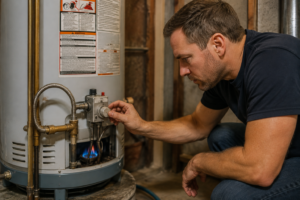
You light the pilot on your gas water heater, hold the button down like the instructions say, count to sixty, let go, and for a moment everything seems fine. Then thirty seconds later, or maybe a few minutes later, it goes out again. You try it a second time. Same result. A third time, just to be sure you are not doing something wrong. Still the same thing.
This is one of the most common water heater complaints we hear, especially as the weather cools down and gas water heaters start working harder. The good news is that a pilot light that will not stay lit almost always points to one of five specific causes, and once you know what to check, you can usually figure out exactly what is going on before you ever pick up the phone.
Let us walk through each one, starting with the most common.
Cause 1: A Failing Thermocouple
This is by far the most common reason a pilot light will not stay lit, and it is worth understanding exactly what this small part does and why it matters so much.
The thermocouple is a safety sensor positioned directly in the pilot flame. Its entire job is to confirm that the pilot is actually burning. When the thermocouple senses heat from the flame, it sends a small electrical signal that tells the gas valve to stay open and keep supplying fuel to the pilot. If the thermocouple does not sense that heat, it assumes the pilot is out and shuts the gas valve completely. This is a critical safety feature that prevents unburned gas from continuously flowing into your home.
Over time, thermocouples wear out. The metal degrades from repeated heating and cooling cycles, and eventually it stops generating a strong enough signal to keep the gas valve open, even when the pilot is burning perfectly fine. When this happens, you can relight the pilot as many times as you want. It will always go out shortly after you release the button because the thermocouple simply cannot hold the valve open on its own anymore.
How to know if this is your problem. If your pilot lights easily, burns steadily while you hold the button, and then goes out within seconds to a couple minutes after you let go every single time, a worn thermocouple is the most likely cause. This is especially true if your water heater is more than six or seven years old, since thermocouples typically last that long before needing replacement.
What you can do. Thermocouples are inexpensive parts, but replacing one correctly involves working with the gas control valve, disconnecting and reconnecting a gas fitting, and making sure everything is properly sealed and tested afterward. This is a job we recommend leaving to a licensed technician. It is a quick, affordable repair when done professionally, and it eliminates the guesswork of whether the replacement was installed correctly and safely.
Cause 2: A Dirty or Clogged Pilot Tube
The pilot tube is the small tube that delivers gas specifically to the pilot flame. Over months and years, this tube can accumulate dust, soot, or even small amounts of corrosion, particularly if your water heater sits in a garage or utility closet where dust settles easily.
When the pilot tube becomes partially clogged, the flame it produces gets smaller and weaker. A weak flame may not generate enough heat to properly activate the thermocouple, even if the thermocouple itself is in good condition. This creates a situation that looks identical to a thermocouple failure from the outside, but the actual cause is a restricted gas flow rather than a failing sensor.
How to know if this is your problem. Look closely at your pilot flame the next time you light it. A healthy pilot flame should be a steady blue flame, roughly half an inch to an inch tall, with a small yellow tip. If your flame looks small, weak, flickering, or mostly yellow instead of blue, restricted gas flow through a dirty pilot tube is a likely culprit.
What you can do. Cleaning a pilot tube requires disconnecting it carefully and clearing the opening, typically with a fine wire or specialized cleaning tool. Because this involves working directly with a gas line component, we recommend having a technician handle this rather than attempting it yourself. It is a fast fix once diagnosed correctly.
Cause 3: A Draft Affecting the Pilot Flame
Sometimes the problem has nothing to do with the water heater itself and everything to do with airflow around it. Water heaters are often installed in garages, closets, or utility spaces that are not perfectly sealed from outside air. A draft, even a subtle one you cannot feel standing in the room, can be enough to disturb a small pilot flame and blow it out repeatedly.
This becomes more noticeable during colder months in Richmond TX when homeowners run bathroom exhaust fans, kitchen range hoods, or clothes dryers more frequently. These appliances pull air out of the house, which can create negative pressure that draws air in through gaps around doors, vents, or the water heater closet itself, disturbing the pilot flame in the process.
How to know if this is your problem. Pay attention to when the pilot goes out. If it seems to happen more when certain fans or appliances are running, or if you notice a physical draft near the water heater closet door or vents, airflow disruption is worth investigating before assuming a mechanical failure.
What you can do. Check the door and any vents on your water heater closet for gaps that could be letting in more air than intended. If your unit has an access panel over the pilot assembly, make sure it is properly seated and closed after any recent servicing. In some cases, sealing gaps around the closet or adjusting nearby ventilation resolves the issue without any repair to the water heater itself. If the draft issue persists and you are unsure of the source, a technician can help identify exactly where the airflow disruption is coming from.
Cause 4: A Faulty Gas Control Valve
The gas control valve is the component that regulates gas flow to both the pilot and the main burner, and it houses the mechanism that interprets the thermocouple’s signal. While less common than a simple thermocouple failure, the internal components of the gas valve itself can wear out or malfunction, causing it to shut off gas flow to the pilot even when everything else in the system is functioning correctly.
This is a bit trickier to diagnose because the symptoms can look almost identical to a thermocouple issue. The key difference usually shows up after a thermocouple has already been replaced and the problem persists.
How to know if this is your problem. If a technician has already replaced your thermocouple and the pilot still will not stay lit, or if the pilot goes out at inconsistent intervals rather than a predictable pattern, a failing gas control valve becomes a more likely explanation.
What you can do. This is a component that requires professional diagnosis and replacement. Gas control valves are more involved to replace than a thermocouple, and this repair should always be performed by a licensed technician given the direct involvement with your home’s gas supply.
Cause 5: A Genuine Gas Supply Issue
Less common but worth ruling out, especially if you notice this problem starting suddenly across multiple gas appliances in your home. Low gas pressure, a partially closed gas shutoff valve, or an issue with your home’s gas line can all affect the pilot’s ability to establish and maintain a proper flame.
How to know if this is your problem. Check your water heater’s dedicated gas shutoff valve, typically located on the gas line leading into the unit, and confirm it is fully open rather than partially closed. If you have other gas appliances in your home, such as a stove or furnace, and you are noticing performance issues with those as well, a broader gas supply problem may be at play rather than something isolated to your water heater.
What you can do. If your shutoff valve is fully open and you are still seeing issues, or if you suspect a broader gas supply problem, this is not something to troubleshoot further on your own. Contact your gas utility provider to check for supply issues, and have a licensed technician inspect your home’s gas line and connections to your water heater.
What to Do If You Smell Gas
This deserves its own clear mention. If at any point during this process you smell gas, whether faint or strong, stop what you are doing immediately. Do not attempt to light the pilot again. Leave the area, turn off the gas supply to the unit if you can safely do so, and contact your gas provider along with a licensed technician right away. A pilot light that will not stay lit is a maintenance issue in almost every case, but a gas smell is a safety issue that needs immediate attention.
Why This Happens More in Winter
If you are dealing with this problem specifically during the colder months, there is a reason it seems to happen more often this time of year. Gas water heaters run longer and more frequently during winter as they work to bring in colder groundwater and heat it to your set temperature. This increased usage puts more cumulative stress on components like the thermocouple, and a part that was borderline functional during warmer months when the pilot ran less often can finally give out once winter demand increases.
This is also why we see a noticeable rise in pilot light service calls across Richmond TX, Sugar Land, and Fort Bend County every year once temperatures start dropping. If your water heater is more than six years old and you have never had it serviced, winter is often when small underlying issues finally become noticeable.
When to Stop Troubleshooting and Call a Professional
A single relight attempt following the instructions on your unit is completely reasonable to try yourself. If the pilot lights and holds, you are done. But if you find yourself relighting it repeatedly with the same result, or if you are seeing any of the warning signs described above, continuing to try on your own usually just delays a fix that a technician can complete quickly and correctly.
Most pilot light issues, particularly thermocouple failures, are fast and affordable repairs when handled by someone with the right tools and experience. Attempting repeated repairs yourself on gas components carries real risk, and getting it wrong can mean dealing with a bigger problem later, or worse, a safety concern in your home.
If you are dealing with this issue and want it resolved correctly the first time, our team can diagnose the exact cause, whether it is a worn thermocouple, a dirty pilot tube, or something else, and get your hot water back safely and quickly. You can also read our broader guide on how to fix a water heater and understand the full range of common problems if you are dealing with additional symptoms beyond just the pilot light.
Call Temper Mechanical at (346) 485-8142
We serve Richmond TX, Sugar Land, Rosenberg, Pecan Grove, and all of Fort Bend County with same day water heater repair, upfront pricing, and technicians who explain exactly what they find before any work begins.
Temper Mechanical Air & Heat LLC
6115 FM 762 Rd Suite 1200, Richmond TX 77469
Licensed. Bonded. BBB Accredited. Minority Business Certified. Flexible Financing Available.