
Clogged AC Drain Line in Richmond, TX: Why Water Is Dripping Above Your Window and What to Do
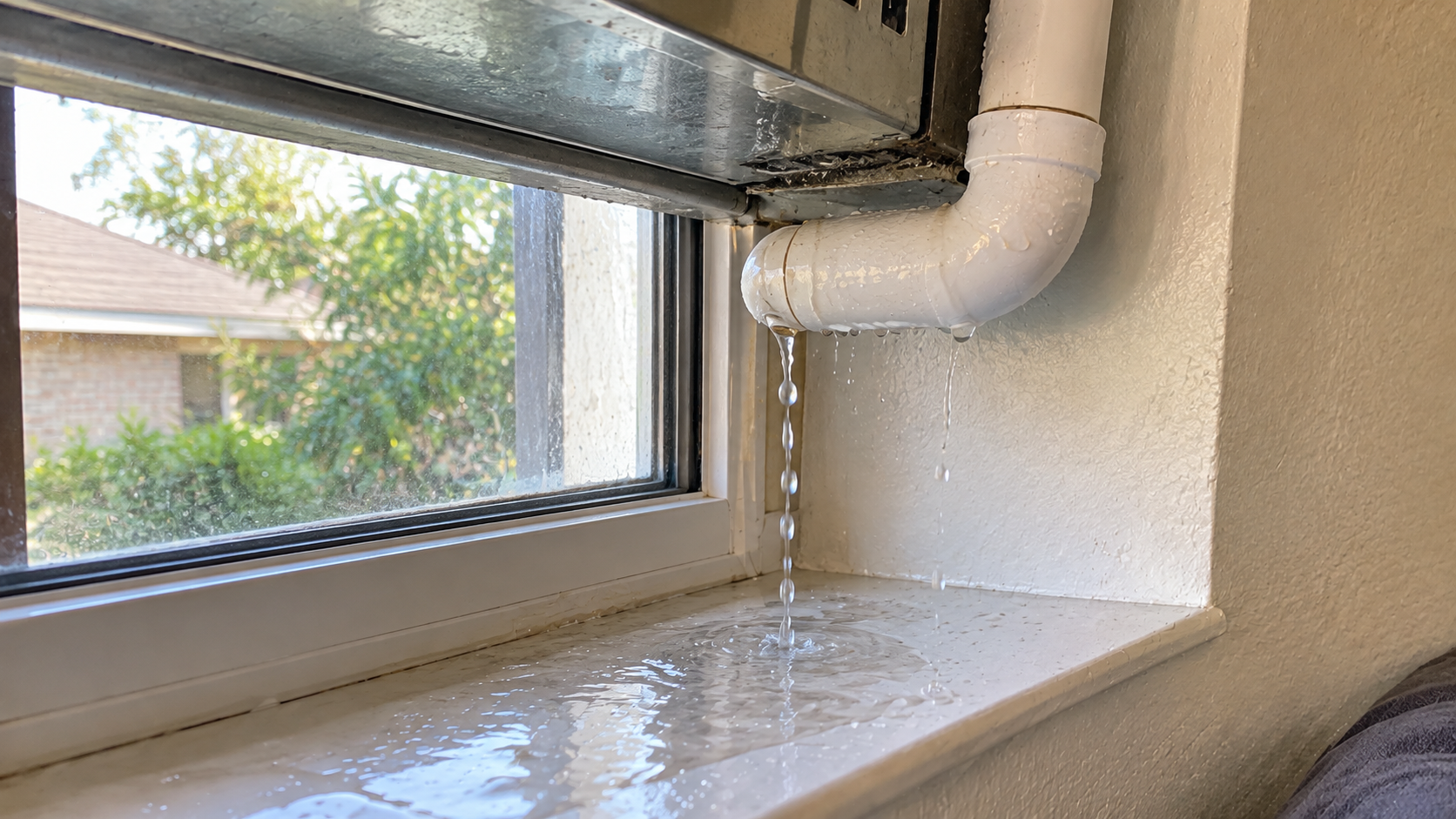
You walk outside and notice water dripping from a small white pipe sticking out above a window or under the roof eave. Or the AC simply shut off on a warm afternoon, and the thermostat is on but nothing's blowing. Or there's a brown ring spreading across the ceiling under the attic unit. These look like three different problems. In most Richmond homes, they're the same one: a clogged AC drain line.
It's the most common air conditioning problem we see in Fort Bend County. The good news is that it's usually simple to fix, as long as you catch it before water gets into the ceiling.
Water coming through the ceiling right now? Turn the AC off at the thermostat and call (346) 485-8142.
The Short Answer
Your AC pulls water out of the air as it cools, and that water runs out through a drain line. When the line clogs, water backs up into the drain pan. In attic systems, a backup drain then sends the overflow to a pipe that ends over a window or eave, so you'll notice it. Some systems also have a float switch that shuts the AC off before the pan overflows. Water dripping from that pipe, or an AC that shuts off with water in the pan, means the main drain is blocked and needs to be cleared.
Why Houston Area ACs Make So Much Water
Cooling and drying the air happen at the same time. As warm, humid air passes over the cold indoor coil, moisture condenses on it and drips into a pan, just like water beading on a cold glass. In a humid climate like ours, a typical home AC can remove somewhere between 5 and 20 gallons of water a day. On muggy days, it can be even more.
That's a lot of water moving through a pipe about the width of your thumb, usually from an air handler in a hot attic. Give it a warm, damp, dark pipe and it grows a slimy layer of algae and bacteria over a few months. That slime is what clogs most drains.
How Your AC Drain System Works
| Part | What it does | What you notice when it fails |
|---|---|---|
| Primary drain pan | Sits under the indoor coil and catches the water | Water overflowing inside the unit |
| Primary drain line | Carries water outside, usually near the outdoor unit or to a plumbing drain | Nothing comes out outside, even on a humid day |
| Cleanout tee | A capped T fitting near the indoor unit, used to flush the line | Water sitting in it when you open the cap |
| Secondary (overflow) drain | A backup line that ends somewhere you'll see it, often above a window or eave | Dripping from a pipe above a window |
| Secondary pan | A large metal or plastic pan under the whole attic unit | Standing water under the unit, or rust holes |
| Float switch | A safety switch that shuts the AC off when water rises | The AC stops cooling, even though the thermostat is set to cool |
Building codes require this kind of overflow protection when the indoor unit sits in an attic or over a finished ceiling, because a clogged drain there can do serious damage. The pipe above your window isn't a defect. It's a warning system doing its job.
Signs Your AC Drain Line Is Clogged
| What you see | What it usually means | How urgent |
|---|---|---|
| Water dripping from a pipe above a window or under an eave | The main drain is blocked and the backup drain is carrying the water | Fix within a few days. The backup is working, but don't wait for it to fail too. |
| AC won't cool, the indoor fan may run or stop, and there's water in the pan | The float switch tripped | Clear the drain the same day |
| A water stain or bubble on the ceiling under the attic unit | The pan has overflowed, or the secondary pan is rusted through | Turn the AC off and call now |
| Water on the floor around an indoor unit in a closet or garage | The pan or drain line is backing up | Turn the AC off and clear the line |
| A musty smell from the vents | Standing water in the pan, or slime in the line | Schedule service soon |
| Nothing dripping outside on a hot, humid afternoon | The line may be blocked, or water is going somewhere else | Check the pan and cleanout |
An AC that won't start at all can have other causes too. Our guide to why your AC is not turning on covers the rest.
Why Drain Lines Clog So Often in Richmond Homes
- Algae and slime. Warm attic air and steady moisture feed the slimy buildup that blocks most drains.
- Dust and insulation. A dirty filter, or attic insulation drawn into the unit, sends debris into the pan.
- Insects. Wasps, mud daubers and ants move into the open end of the drain outside.
- Lines that sag. A drain line in the attic needs a steady downhill slope. Where it dips or goes flat, water and debris collect.
- Buried outlets. Mulch, soil or a growing shrub can cover the outdoor end of the line.
- Missing or dry traps. Without a working trap, the blower can pull air up the drain and keep the pan from draining properly.
What You Can Safely Do Yourself
If the line is only partly blocked and there's no water in the ceiling, you can often clear it in about 20 minutes.
- Turn the AC off at the thermostat, then switch off the breaker for the indoor unit.
- Find the outdoor end of the drain line. It's usually a short white PVC pipe near the outdoor unit or the foundation. Clear away any mulch, soil or insects.
- Use a wet/dry vacuum. Hold the vacuum hose tightly over the end of the pipe and run it for a minute or two. You'll often pull out a slug of slime.
- Flush from the cleanout. At the indoor unit, remove the cap on the cleanout tee and slowly pour in about a cup of distilled white vinegar. Wait 30 minutes, then pour in clean water and make sure it drains outside.
- Dry the pan. If there's water in the secondary pan, soak it up with a wet/dry vac or towels. Many float switches reset by themselves once the water drops.
- Turn the power back on and check that water drips from the outdoor end within the next hour or so of cooling.
Skip the bleach. Bleach can attack the PVC cement on drain line joints, and its fumes are hard on the aluminum coil. Distilled vinegar is the safer choice for routine cleaning.
Don't bypass or remove the float switch to get the AC running again. It's the only thing standing between a clogged drain and a wet ceiling.
Have a pump instead of a gravity drain? Some indoor units in closets and garages use a small condensate pump. If yours does, see our guide to a condensate pump that's not working.
When to Call a Technician
- Water has reached the ceiling or the floor
- The secondary pan is rusted or has holes
- The line clogs again within a few weeks of being cleared
- You've cleared the drain and the AC still won't come back on
- You can't find the cleanout, or the line runs somewhere you can't reach
- Water drips from the overflow pipe again and again
- There's a strong musty smell that doesn't go away
A drain that keeps clogging usually has a cause behind it: a sag in the attic, a missing trap, a dirty coil or an air leak around the unit. Clearing it again only treats the symptom.
What We Do on a Drain Line Call
- Clear the full length of the line with pressure or vacuum, not just the first few feet
- Clean the primary pan, and check the coil for buildup that's feeding the clog
- Check the slope of the line through the attic and fix any sags
- Make sure the trap is the right size and working
- Test the float switch, and confirm it shuts off the system before the pan overflows
- Inspect the secondary pan for rust, and replace it if it's failing
- Add a float switch to the primary drain if the system only has protection in the secondary pan
- Look for related problems, such as wet ductwork or insulation around the unit
If a ceiling stain is near a supply vent rather than under the unit, the water may be coming from sweating ductwork instead. Our post on ductwork sweating explains the difference. For any other cooling problem, see our AC repair service in Richmond.
How to Keep Your Drain From Clogging
- Flush the line with vinegar every two to three months while you're using the AC. Around Richmond, that's from about March through November.
- Change your air filter on schedule. Less dust in the pan means less food for slime.
- Keep the outdoor end clear of mulch, soil and plants.
- Ask about pan treatment tablets, which slow algae growth in the pan.
- Get a yearly tune up. Clearing and testing the drain should be part of every AC maintenance visit. See our HVAC maintenance plans.
Does This Matter in Winter?
Yes, in two cases. On warm November and December days around Richmond, the AC still runs and still makes water. And if your home has a high efficiency gas furnace, it produces water while heating, and that water often runs through the same drain system. A clogged line can shut down your heat on a cold morning the same way it shuts down your AC in summer. If your furnace is leaking water or shutting off, see our furnace repair service.
Late fall is also the best time to have the drain cleared and tested, before the first humid stretch of spring catches a slimy line.
Frequently Asked Questions
Why is water dripping from a pipe above my window?
That pipe is usually your AC's secondary, or overflow, drain. It's placed somewhere you'll see it, on purpose. When water drips from it, the main drain line is clogged and the overflow is doing its job. Clear the main drain soon, before the backup clogs too.
How do I know if my AC drain line is clogged?
Common signs are water dripping from the overflow pipe, standing water in the drain pan, an AC that shuts off while the thermostat is still calling for cooling, water around the indoor unit, a musty smell and no water coming out of the drain outside on a humid day.
Why did my AC shut off with water in the pan?
The float switch detected rising water and shut the system off to prevent an overflow. Clear the drain, dry the pan and the switch will usually reset. Don't bypass it.
Can I use bleach to clean my AC drain line?
We recommend distilled white vinegar instead. Bleach can damage the cement on PVC joints and is harsh on the aluminum coil. Pour about a cup of vinegar into the cleanout, wait 30 minutes and flush with water.
How often should I clean my AC drain line?
Every two to three months during cooling season is a good routine in the Houston area, plus a professional check at your yearly tune up.
How much water should my AC drain?
In a humid climate like ours, a home AC can drain roughly 5 to 20 gallons a day, depending on humidity and how long it runs. A steady drip outside on a warm afternoon is a good sign.
Can a clogged AC drain cause ceiling damage?
Yes. When the pan overflows or a rusted secondary pan leaks, water soaks the drywall below the attic unit. Turn the AC off as soon as you see a stain and have the drain and pans checked.
Is the drip from the pipe near my outdoor unit normal?
Yes. That's usually the main drain line doing its job. Dripping from a pipe above a window or eave is the one that signals a problem.
Get Your AC Drain Cleared Before It Reaches the Ceiling
A dripping overflow pipe or a float switch shutdown is your early warning. Temper Mechanical clears the full drain line, checks the slope, trap and pans, and tests the safety switch, so the problem doesn't come back next month. We serve Richmond, Sugar Land, Rosenberg, Pecan Grove, Katy and Cinco Ranch.
Call (346) 485-8142 to schedule AC drain service.
Call (346) 485-8142Office hours: Monday to Sunday, 8:00 AM to 7:00 PM. Emergency service available 24/7.
Temper Mechanical Air & Heat, LLC · 6115 FM 762 Suite 1200, Richmond, TX 77469 · (346) 485-8142 · info@tempermechanical.com
HVAC License TACLA 92943C, regulated by the Texas Department of Licensing and Regulation, P.O. Box 12157, Austin, TX 78711 · Plumbing License MPL 45322, regulated by the Texas State Board of Plumbing Examiners